Describe Three Ways to Prepare for a Tsunami
You experience an earthquake and immediately turn on your radio. Roads tend to become gridlocked during a tsunami emergency making it more difficult for the emergency response teams to.
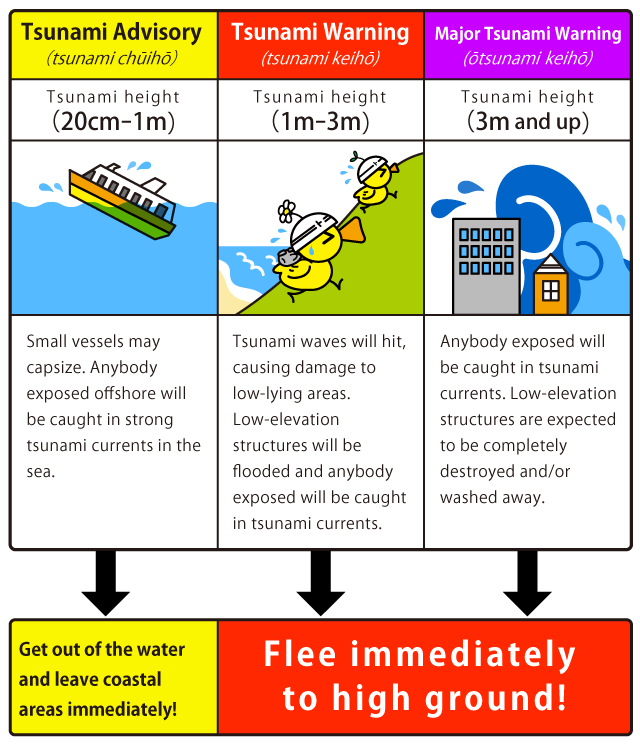
Being Prepared For A Tsunami Nippon Com
During a tsunami Stay out of the water and away from beaches and waterways.

. 8 Stay in your safe spot for at least 8 hours. If you can see it you are too close to escape. Never go to the shore to watch the tsunami.
Up to 24 cash back How to prepare for a tsunami. You prepare a space in the attic or on the roof for you to evacuate to during a tsunami. Be alert to signs of a tsunami such as a sudden rise or draining of ocean waters.
Make sure to add several rolls of toilet paper as well. 2 Follow tsunami evacuation route signage. Move inland to higher ground immediately.
If caused by an earthquake Drop Cover and Hold On. In addition to knowing the warning signs of a tsunami it is important to plan an evacuation route and put together a disaster supply pack that includes food water first aid supplies clothing bedding etc. A tsunami may be coming.
If you hear a loud roar from the ocean. Listen to emergency information and alerts. Stay out of the water and away from beaches and waterways.
To protect yourself from the earthquake first. Im going to show you how to prepare for a tsunami so that you can increase your chances of survival. In the deep ocean tsunami waves are often barely noticeable but can move as fast as a jet plane over 500 mph.
If you live in a. In order to prepare for a tsunami you should know your risk and have an evacuation plan with routes memorized. Use TV radio or internet to.
During a Tsunami Follow the evacuation order issued by authorities and evacuate immediately. Having appropriate procedures in place to quickly assess the risk of a tsunami issue effective and clear warnings and manage evacuation procedures are essential. An aerial view video of giant tsunami waves.
The best way to be prepared for a natural disaster is to fill an emergency pack with clothing toiletries medications money bottled water and non-perishable food. If you hear an official tsunami warning or detect signs of a tsunami evacuate at once. Keep it in your car for easy transport but make sure its not too heavy in case the roads are blocked and evacuating by foot is your only option.
Lastly if you hear an official tsunami warning or experience any of the warning signs evacuate as quickly as possible and move to higher. Contents hide 1 Know Your Communitys Evacuation Routes 11 Practice Evacuation Routes Beforehand 2 Build an Emergency Kit 3 Create a Point to Meet Up 4 Recognizing The Signs 5 Warn Others And Get to Safety 6 Taking Action. A tsunami warning is issued when authorities are certain that a tsunami threat exists and there may be little time to get out.
When the shaking stops gather members of your household and review your evacuation plan. 5 Go as far inland as possible. Take your Disaster Supplies Kit.
A tsunami may be coming. During a tsunami If youre in a tsunami area and there is an earthquake first drop to the floor cover your head and neck and hold on to something stable. Use a NOAA Weather Radio or stay tuned to a Coast Guard emergency.
Ensuring residents who live in high-risk areas for tsunami are educated and aware of both the risks and appropriate actions to take in the event of a tsunami is also important. You research disaster plans and warning systems in your area. 7 Go out to sea if youre in a boat.
DROP COVER HOLD ON. 6 Grab something floating if youre in the water. 4 Climb to the top of a building if youre trapped.
I f you have live in a tsunami prone area and there is Tsunami warnings the first thing you should do much before the tsunamis is to plan an evacuation route form your house work space school etc. 1 Evacuate on foot if possible. If the school evacuation plan.
Get to high ground as far inland as possible. Take your animals with you. If you can see it you are too close to escape.
Get an evacuation or bug-out kit with all the supplies to last you at least 72 hours. Tsunamis are a serious threat to life and property. Evacuate on foot or by bike and drive only if essential.
You and your family practice your evacuation plan. Follow instructions from local officials to move to higher ground or evacuate into a tall building. 3 Get to high ground.
IF YOU ARE UNDER A TSUNAMI WARNING. If You Feel a Strong Coastal Earthquake Drop cover and hold on to protect yourself from the earthquake. Most tsunamis are caused by large earthquakes below or near the ocean floor but can also be caused by landslides volcanic activity certain types of weather and near-earth objects.
Having supplies will make you more comfortable during the evacuation. You may not have access to clean running water during and after a tsunami but include personal hygiene products such as toothpaste toothbrushes and deodorant. Emergency blankets sleeping bags rain gear and changes of clothing for everyone in the family are also important.
Be prepared for a tsunami If you are traveling to areas that are known to be tsunami hotspots its vital to be prepared and be alert to any warnings made by local authorities. Inside your travel pack make sure you keep an emergency kit in case you need to make a dash in the middle of the night. You will also want to keep a radio TV or any other source that will give you information to predict a.
Never go to the shore to watch the tsunami. The recent magnitude 71 earthquake and subsequent tsunami warning in northern New Zealand reminds us that tsunamis are unpredictable and can strike any time.

Social Media Tsunami
Tsunami

How To Prepare In Case Of A Tsunami Disasters Youtube
Tsunami Preparedness The Uwi Seismic Research Centre
No comments for "Describe Three Ways to Prepare for a Tsunami"
Post a Comment